
What is Umrah?
Umrah is a pilgrimage to Makkah that can be performed at any time of the year.
“And complete the Hajj and Umrah in the service of Allah.” — QUR’AN 2:196
Understanding Umrah
01
Ihram
Enter the sacred state at the Miqat with intention.
02
Tawaf
Circle the Kaaba 7 times and then pray 2 rak’ahs.
03
Sa’i
Walk between Safa and Marwah.
04
Halq / Taqsir
Shave or shorten the hair.
Why perform Umrah?
- Spiritual cleansing – it removes sins
Renewal of faith & purification of the heart
Following the Sunnah
Become the guest of Allah (swt)
UMRAH MADE SIMPLE
“Prophet Muhammad (peace be upon him) encouraged us to perform Umrah at least once in our lifetime. He himself (PBUH) performed it four times in his lifetime.”
Clear guidance. Confidence at every step.
We guide you before and during your journey, so you understand every step and perform Umrah with confidence.
How to Perform Umrah
Follow the rites in order. Select any numbered step to open its detailed guide.
01
Ihram
BEFORE MIQAT
Prepare, purify, dress and make niyah. Enter Ihram before crossing Miqat.
02
Tawaf
AT THE KAABA
03
SAFA → MARWAH
Walk between Safa and Marwah.
04
AFTER SA’I
Shave or shorten the hair.
Ihram
Ihram is a sacred state of purity, intention, modesty, and discipline entered for Hajj or Umrah.
1
Enter Ihram before crossing Miqat
What to wear
Men: Two unstitched white cloths: one at the waist and one over the upper body.
Women: Modest clothing covering the body; the face and hands remain uncovered.
Protect the state
- Do not cut hair or nails, or use fragrance and scented products.
Bathe with unscented products; wash gently to avoid causing hair to fall.
Change garments when needed; do not use the cloth for wiping or cleaning.
Maintain modesty and avoid cosmetics and make-up.
Enter Ihram
Prepare: Complete grooming and hygiene; secure garments and gather essentials.
Purify: Complete grooming and hygiene; secure garments and gather essentials
Intend: Make Niyah and pray two Rakahs.
Cross: Be in Ihram before passing Miqat.
Tawaf.
7
Why it matters
Worship: Pilgrims circle the Kaaba in obedience to Allah (swt) and they worship Allah, not the Kaaba.
Unity: One movement gathers believers from every nation in unity, harmony, trust, and dua.
Before you begin
- Enter calmly, follow the designated route, and hold the intention for Tawaf.
- Prepare as for prayer and ensure you are in a state of wudu.
- Men uncover the right shoulder for this Tawaf where appropriate.
- Align with Hajar al-Aswad or its green light; keep the Kaaba on your left.
The core action
Begin: At Hajar al-Aswad, say “Allahu Akbar” and gesture towards it if touching is unsafe.
Circle: Walk counterclockwise outside the Hijr; make dhikr, recite Qur’an, and personal dua.
Count: Each return to Hajar al-Aswad completes one circuit. Continue until seven.
Finish: After seven, pray two rak’ahs where safe, drink Zamzam, then proceed to Safa.
SA’I.
7
Why it matters
Trust: Sa’i remembers Hajar’s faithful search for water and her complete trust in Allah.
Worship: The walk combines effort, remembrance, and dua between two symbols of Allah.
Before you begin
- Complete Tawaf, pray two rak’ahs, drink Zamzam, then proceed to Safa.
- Remain in Ihram; wudu is recommended, not required.
- At Safa, face the Qiblah where practical; praise Allah and make dua.
- Count each one-way journey; keep moving safely with the crowd.
The core action
Begin: Start at Safa with takbir, dhikr, and personal dua.
Count: Safa → Marwah is one; Marwah → Safa is two. Continue alternating till seven.
Green Area: Men walk briskly when safe; women maintain a normal pace.
Finish: End length seven at Marwah, then cut or trim the hair to complete Umrah.
Halq & Taqsir
2
Men: Halq or Taqsir – Women: Taqsir Only
Why it matters
Meaning: Cutting the hair marks humility, renewal, and the completion of the pilgrim’s rites.
Mercy: The Prophet (PBUH) prayed for those who shave and those who shorten—with greater emphasis on Halq.
Before you begin
- Finish all seven lengths of Sa’i at Marwah before cutting any hair.
- Remain in Ihram until the required cutting is fully complete.
- Use clean scissors or clippers in a safe place or licensed barber.
- Follow your group scholar where the required amount or method differs.
The core action
Men – Halq: Shave the full head evenly; avoid patchy or partial shaving.
Men – Taqsir: Shorten evenly across the head—not only one small lock.
Women: Taqsir only: gather the hair and trim a small amount from the ends—never shave.
Exit Ihram: Once cutting is complete, Ihram restrictions end and Umrah is finished.
How Umrah flows.
Four phases carry you from intention to completion—each with a clear action, recitation, and moment for dua.
01
Prepare & enter Ihram
Purify · dress · pray · make Niyah
What to read
Labbayk Allahumma Umrah
02
Enter the Haram
Right foot · entrance dua · approach Mataf
What to read
Allahu Akbar · La ilaha illallah
03
Tawaf & Sa’i
7 rounds around the Kaaba · 7 lengths Safa–Marwah
What to read
Dhikr · Qur’an · personal dua
04
Cut hair & complete
Halq or Qasar · restrictions end
What to read
Ask Allah to accept your Umrah
Prepare. Intend. Respond.
Before Miqat, move through five deliberate actions—then the state of Ihram begins with intention and Talbiyah.
Purify
Complete personal grooming first, make Wudu and bathe with the intention of Ihram.
Dress
Men: two unstitched white cloths. Women: loose, modest clothing with face and hands uncovered.
Pray
Offer two Rakahs where appropriate; the supplied guide suggests Al-Kafirun then Al-Ikhlas.
Intend
Face the Qiblah and make the intention for Umrah before crossing Miqat.
Recite
Say the Talbiyah audibly; continue it often until Tawaf begins.
Labbayk Allahumma Umrah.
“O Allah, here I am to perform Umrah.”
Talbiyah
Labbayk Allahumma labbayk. Labbayka la sharika laka labbayk. Innal-hamda wan-ni‘mata laka wal-mulk. La sharika lak.
“Here I am at Your service, O Allah… You have no partner. All praise, favour, and sovereignty belong to You.”
Enter with humility. Circle with focus.
Begin at the Haram calmly, then complete seven rounds of Tawaf from the Black Stone—without pushing or obstructing others.
Entering Masjid al-Haram
Right foot
Enter calmly and move toward Mataf.
Entrance dua
Ask Allah to forgive you and open the doors of mercy.
First sight
Say Allahu Akbar ×3 and La ilaha illallah ×3; send blessings and make personal dua.
7
ROUNDS OF TAWAF
Start and finish at Hajr al-Aswad. Signal Istilam when touching or approaching is unsafe.
Read Qur’an you know, make dhikr, send blessings, and make personal dua in any language.
RUKN YAMANI → HAJR AL-ASWAD
Rabbana atina fid-dunya hasanah, wa fil-akhirati hasanah, wa qina ‘adhaban-nar. “Our Lord, grant us good in this world and the Hereafter, and protect us from the Fire.”
Walk the final path. Leave renewed.
01
Two Rakahs
Pray behind Maqam Ibrahim if safely possible—or elsewhere in the mosque.
02
Zamzam
Drink, face the Qiblah where practical, and make sincere dua.
03
Sa’i
Walk seven lengths from Safa to Marwah, ending at Marwah.
04
Hair
Men: Halq or Taqsir. Women: trim a small amount from the ends.
AT SAFA & MARWAH
Allahu Akbar ×3 · La ilaha illallah · send blessings · make personal dua.
GREEN-LIGHT AREA
Rabbighfir warham, anta al-a‘azz al-akram. “My Lord, forgive me and have mercy on me.”
Two sacred cities. One guided journey.
Visit the defining sites of Makkah and Madinah with context, purpose, and guidance at every stop.
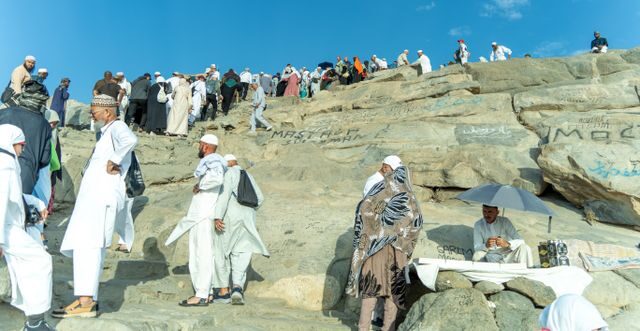
Makkah Ziyarat
- Jabal al-Noor (Hira Cave)
- Jabal Thawr
- Mina
- Arafat
- Muzdalifah
- Masjid Aisha (Taneem)
- Birthplace of Prophet Muhammad ﷺ (Historical Site)
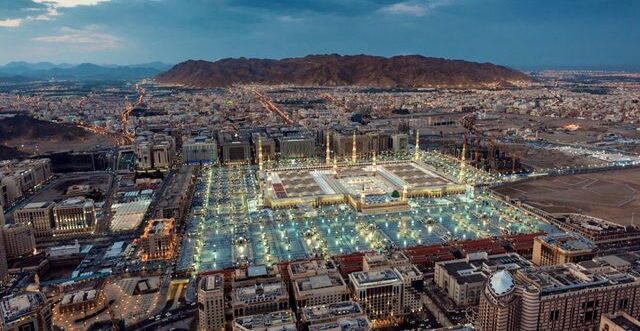
Madinah Ziyarat
- Masjid an-Nabawi
- Jannat al-Baqi
- Quba Mosque
- Uhud Mountain
- Masjid Qiblatain
- Seven Mosques (Sab’a Masajid)
EVERY VISIT, EXPLAINED
Historical context, significance, and guidance from your group tour leader.